
March 18, 2026
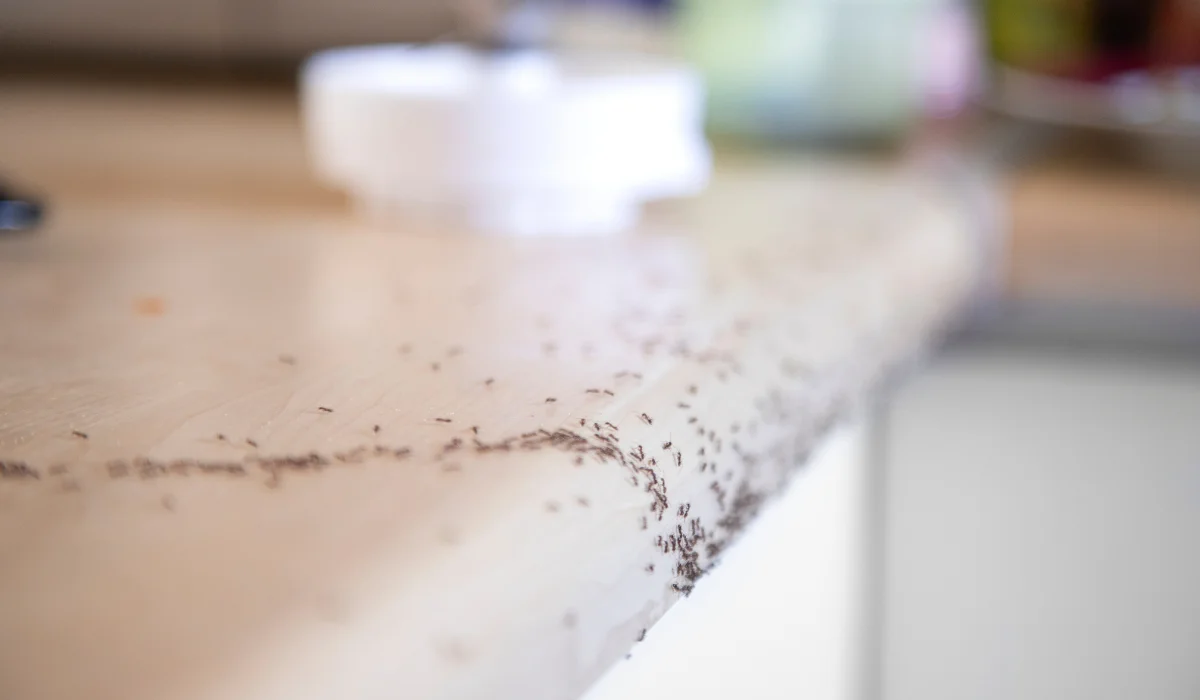
Many homeowners in Mobridge feel surprised when they notice tiny ants in the kitchen. You may see a few on countertops or a line along the floor. At first, the ant problem may seem small.
Kitchen ants often appear when nearby colonies find food and water inside the home. When worker ants find a food supply, they leave scent trails, also called pheromone trails, to guide other ants to the same spot.
Knowing why ants appear in kitchens can help stop the problem early. If you know what attracts ants and how they enter your home, you can reduce ant activity, support effective ant control, and prevent an ant infestation.
Key Takeaways
- Ants show up in kitchens when they find food, water, and easy entry points.
- Tiny ants often follow scent trails from nearby colonies.
- Cleaning food residue, sealing cracks, and controlling ants can stop the problem before it spreads.
Why Ants Show up in Kitchens
Ants enter kitchens for a few common reasons.
Easy Entry Points
Ants can enter homes through very small openings, such as cracks near windows and doors, baseboards, siding, or gaps around pipes. Worn weatherstripping and poor sealing make it easier for tiny ants to move inside and repeatedly use the same entry points over time.
Nearby Outdoor Ant Colonies
Many kitchens sit near outdoor nesting areas where ant colonies live in soil, sidewalks, or landscaping.
Several types of ants may invade kitchens, including pavement ants, black ants, odorous house ants, sugar ants, carpenter ants, and even pharaoh ants when they find a nearby food source.
Seasonal Weather Changes
Weather changes can push ants indoors. Rain, heat, or drought may drive ants to search for food and water inside homes, so kitchen ants often appear in spring and summer.
What in Kitchens Attracts Ants
Kitchens provide many things ants need.
Food Residue on Countertops
Crumbs, spills, and food residue on countertops or tables create easy food for ants. Even small amounts of sugar or grease can draw worker ants.
Unsealed Food Storage
Open packages in pantries allow ants to access cereals, snacks, and sugar. Using sealed or airtight containers helps protect stored food and reduce access.
Pet Food and Trash
Pet food left out overnight and open trash cans can attract ants. These areas provide steady food.
Moisture and Water Sources
Leaky faucets, standing water, and damp areas near sinks attract ants, especially during dry conditions.
Signs Ants Are Nesting Nearby
Certain clues may mean an ant colony is nearby.
Visible Ant Trails
Ant trails form when worker ants follow scent trails between a food source and the nest. These trails often appear along baseboards, countertops, or sinks.
Groups of Tiny Ants Indoors
Small groups of tiny ants indoors often mean a nearby colony, especially when ants gather around food or water sources.
Ant Activity Near Walls or Cabinets
Ants often move along edges such as baseboards, cabinet lines, and wall cracks, where small openings often hide entry points.
How to Reduce Ant Activity Indoors
Simple pest management steps can help keep ants out of kitchens.
Clean Up Food Sources
To get rid of ants, wipe countertops, sweep crumbs, and clean spills quickly. Consistent cleaning helps reduce ants. Store food in sealed containers and do not leave food out overnight.
Remove Water Sources
Fix dripping faucets and remove standing water near sinks to reduce moisture.
Seal Entry Points
Seal cracks around windows, doors, and baseboards with caulk and weather stripping. Some homeowners apply a light repellent around these areas.
Use Ant Bait Carefully
Ant bait stations let worker ants carry bait back to the entire colony. Store-bought baits or traps may help reduce ant activity, but if the problem continues, you may need professional help.
Book Ant Control in Mobridge
Professional pest control finds the source of ant activity and treats the entire colony.
If homeowners keep seeing ant trails or large numbers of ants, the issue may involve hidden ant colonies around the property. A trained exterminator can identify the type of ant and find nesting areas.
At Pfitzer Pest Control, we offer professional pest control and targeted ant control services across South Dakota. Our treatments remove ant colonies and help prevent future infestations.
Contact us to schedule your ant control service.
FAQs
Why do I suddenly have ants in my kitchen?
Ants appear when they find food sources, water sources, or crumbs in the kitchen. Worker ants follow scent trails from nearby colonies to reach food.
Do DIY ant traps work?
Some DIY methods, like ant traps or borax bait, may reduce ants. These solutions may not remove the entire colony if the nest stays out of sight.
When should I call pest control for ants?
If ant trails keep coming back or the number of ants increases, professional pest control can help locate the nest and apply targeted treatments.
Prev Post