
March 18, 2026
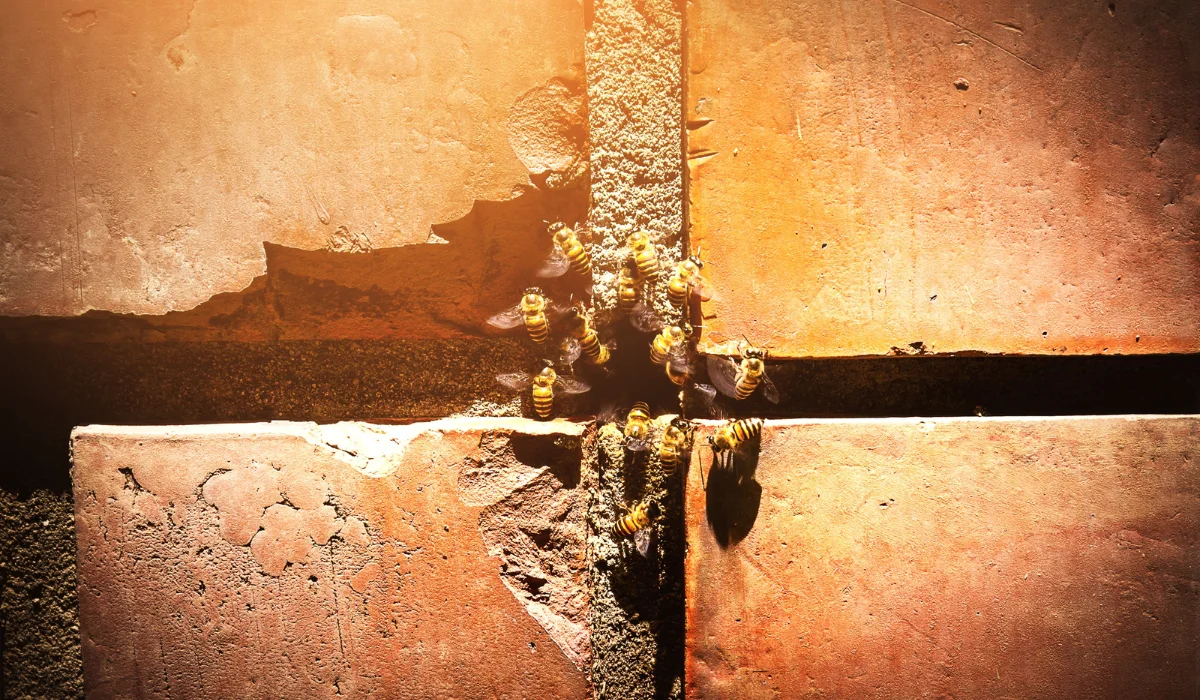
Finding bees around your home can confuse many homeowners in Huron. You might see a few bees flying near your siding or roofline. At first, this may seem like normal bee activity in your yard.
Sometimes, bees start nesting inside walls. When they form a full colony, the problem can grow into a larger bee infestation. A growing bee colony inside the walls can cause noise, damage, and other problems in the home.
Knowing the early signs of bees in walls helps you act quickly. If you notice signs such as buzzing sounds or bees entering small openings, it may be time to inspect the area or call for professional bee removal.
Key Takeaways
- Bees in walls often show clear signs.
- Homeowners may notice a buzzing sound, bees using entry points, or dark stains near siding.
- A growing bee colony inside wall cavities can lead to a serious infestation.
- A professional bee removal or a beekeeper is often the most reliable way to fix the problem.
Signs of Bees Nesting Inside Walls
Here are common signs of bees nesting in wall cavities.
A Buzzing Sound in the Walls
One of the first signs of bees nesting inside walls is a steady buzzing. You may hear a soft humming from behind the drywall, especially on warm afternoons when bee activity increases.
This sound may mean a honey bee colony or another bee species is inside wall voids or hidden spaces.
Bees Flying In and Out of the Same Spot
Watch for bees using the same entry points near siding, soffits, or eaves. When bees nest inside walls, you may see increased bee activity, with bees entering and leaving through the same small openings over time.
Dark Stains on Walls or Siding
Another sign of bees in walls is dark stains near entry points, such as soffits, small holes, or crevices. Honey and honeycomb can leak through drywall or siding, leaving visible marks.
Why Bees Choose Wall Cavities
Some parts of a home make ideal nesting sites for bees.
Small Gaps and Entry Points
Bees look for small gaps or openings to enter homes, especially around soffits, roof edges, and siding seams. Once inside, they can reach wall cavities and build honeycomb between studs.
Quiet Areas of Your Home
Bees often settle in quiet areas where they are less likely to be disturbed. Attics, garages, and spaces behind drywall can provide suitable nesting sites where a bee colony can grow over time.
Warm and Protected Spaces
Wall voids provide warm, protected spaces where bees can nest and build honeycombs. These hidden spaces allow colonies to grow unnoticed until bee activity increases.
Why DIY Bee Removal Can Be Risky
Many homeowners try DIY bee removal first. However, this can create bigger problems.
Bee Stings and Safety Risks
A disturbed bee colony can react quickly. Bee stings can happen when bees feel that something is threatening their beehive.
For some people, bee stings can cause serious reactions that require medical attention.
Damage to Walls and Drywall
A bee infestation inside walls may include honeycomb and a large number of bees. Trying to remove bees without the right tools can damage drywall or other parts of the home. Leftover honey may also attract wasps, hornets, or ants.
The Colony May Return
DIY methods may not remove the entire colony, especially when the nest sits inside walls. If part of the hive remains, bees may rebuild, or another bee swarm could move into the same nesting site.
When to Call a Professional
In some cases, you should contact professionals quickly.
Growing Bee Activity
If you see more bees around your home, it often means the colony is expanding inside the walls. This increase in activity is a strong sign of a bee infestation that may require professional bee removal.
Signs of Structural Damage
Large bee colonies can contribute to structural damage as honeycomb builds up inside wall voids between studs. You may notice dark stains, sticky spots, or soft drywall as honey seeps through.
Other Stinging Insects
Not all stinging insects are bees. Hornets and wasps often nest in similar areas, such as eaves, soffits, and wall cavities.
A pest control company can identify the insect and recommend the right bee control or hornet removal.
We provide treatments for stinging insects, including wasps and hornets, as part of our pest control services throughout South Dakota.
Schedule Bee Removal Help in Huron
Professional help can reduce the chance of a small problem turning into an infestation.
If you suspect bees in the walls, a local pest control company can inspect your home and identify the insect, especially if the activity started after moving into a new home. In some cases, homeowners may need to contact a local beekeeper for honey bee removal.
At Pfitzer Pest Control, we help homeowners across South Dakota with stinging insects, including wasps and hornets.
If you notice signs of bees nesting, increasing bee activity, or other pest issues around your home, contact us today.
FAQs
What are the first signs of bees in the walls?
Common signs of bees include a buzzing sound coming from the wall, bees flying in and out of small openings, and dark stains near the siding or soffits.
Can bees cause damage inside walls?
Yes. A growing bee colony can build honeycomb inside wall cavities. Over time, honey and wax may seep through drywall, contributing to structural damage.
Should homeowners remove bees themselves?
DIY bee removal can be dangerous. A beekeeper or pest control company can handle bee removal and identify other stinging insects, such as hornets and wasps.
Prev Post