
March 18, 2026

Many homeowners in South Dakota worry when they see a large brown spider indoors. At first glance, it can be hard to tell if the spider is dangerous or just a common house spider. The two spiders people most often confuse are the wolf spider and the brown recluse spider.
These spider species can look similar. They are both brown, move quickly, and may show up in basements, garages, or storage areas. As a result, homeowners may think the spider is dangerous when they spot one.
Learning a few simple differences can help you identify them. Knowing whether it is a wolf spider or a brown recluse helps you decide if cleaning is enough or if spider control services are needed.
Key Takeaways
- The wolf spider and brown recluse spider may look similar, but they have clear differences.
- A wolf spider usually has large eyes and a wide leg span.
- A brown recluse spider often has a violin-shaped marking on its back.
- Homeowners may need spider control if they notice repeated spider activity.
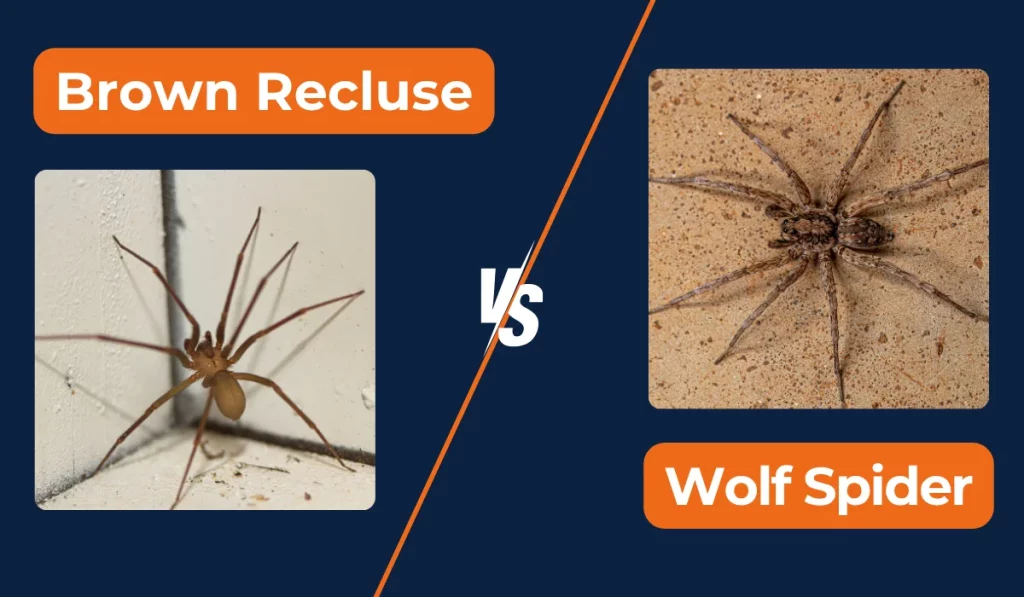
Brown Recluse vs Wolf Spider: Key Differences
This section explains the key differences between them.
The Pfitzer StandardField ID Check · Spiders
Brown recluse vs. wolf spider
Both are brown, quick, and turn up in the same spots. A quick check tells them apart and tells you whether to act.
Needs attentionMonitorNo action
Needs attention
Brown recluse
How to spot itSmaller and smoother, a uniform dark or light brown, with thin legs, tiny hard-to-see eyes, and a darker violin-shaped marking behind the head.
Where it hidesQuiet, undisturbed spots: attics, boxes, stored items, and undisturbed garage corners.
What we’d tell youStays hidden and is rarely seen in the open. Bites are uncommon but can need medical attention in severe cases. Don’t touch it; have it checked.
No action
Wolf spider
How to spot itLarger and heavier (about quarter-sized), with a wide leg span, a thick hairy body, mixed brown or gray patterns, and large eyes that reflect light. Builds no web.
Where it hidesBasements, storage areas, garages, and near woodpiles. Often seen running across floors.
What we’d tell youOne indoors is usually not a problem. Bites are uncommon and tend to feel like a bee sting. Reducing clutter and insect prey limits sightings.
Pfitzer Pest Control is locally owned across South Dakota and Wyoming since 2009. Identify first, then treat only what needs treating. Right-sized. Stood behind.
Body Size and Shape
A wolf spider is usually larger and heavier than a brown recluse. Many wolf spider sightings involve one about the size of a quarter, with a wide leg span and a thicker, hairier body.
A brown recluse spider is smaller and smoother. It has a shorter body length, thinner legs, and a more uniform color, often dark brown or light brown.
Eye Pattern
A wolf spider has several large eyes that are easy to see and often reflect light.
A brown recluse has much smaller eyes that are harder to see without close inspection.
Back Markings
A brown recluse is known for a violin-shaped marking on its back near the head.
A wolf spider does not have this marking and may show stripes or a mix of brown shading.
Quick ID Markers Homeowners Can Check
Homeowners can use a few simple clues to identify the spider without a full inspection.
Look at the Eyes
If the spider has large, noticeable eyes that reflect light, it is more likely a wolf spider. Smaller, less visible eyes point toward a brown recluse spider.
Check the Body Color
Wolf spider species often show mixed brown or gray patterns, while a brown recluse spider is usually a more consistent brown color with minimal patterning aside from the violin marking.
Watch the Movement
Wolf spiders are active hunters and do not use webs to catch food. They often move quickly across floors or walls while searching for insects.
A brown recluse spider tends to stay hidden longer and is less likely to be seen moving in open areas.
Where Each Spider Is Usually Found
Where you find it can help narrow down the species.
Basements and Storage Areas
Wolf spiders often show up in basements and storage areas where insects like cockroaches and flies are present.
Because it hunts rather than waits in webs, you may see a wolf spider running across floors.
Garages and Woodpiles
Wolf spiders may also appear in garages or near woodpiles, where they can find shelter and prey. Brown recluse spiders may also hide in garages, especially in undisturbed corners.
Attics and Quiet Spaces
The brown recluse spider prefers quiet areas such as attics, boxes, and undisturbed storage areas, where it can remain hidden behind items.
What to Do Based on What You Find
The next step depends on what you see in your home.
If It Is a Wolf Spider
One wolf spider indoors is often not a major problem. Wolf spider bites are uncommon and may cause mild pain similar to a bee sting for many people.
Cleaning storage areas and reducing available food sources can help limit future sightings.
If It May Be a Brown Recluse Spider
If you think you have found a brown recluse, do not touch it. Brown recluse bites are uncommon but may require medical attention in severe cases.
Call a pest control company if you suspect this spider species inside your home.
If You See Many Spiders
Seeing several spiders can mean a growing spider infestation or other pest issues. Pest control services can inspect the home, identify spider species, and address the underlying food sources attracting them.
We offer general pest treatments that help reduce spiders, ants, wasps, and other pests that attract spiders.
Schedule a Spider Inspection in South Dakota
Professional inspections help homeowners identify which spider species are present.
At Pfitzer Pest Control, we provide spider control as part of our general insect-spray services across South Dakota. These treatments focus on preventing spiders and other pests from entering the home.
If you continue to see wolf spider activity or suspect a brown recluse spider indoors, contact us today.
FAQs
How can homeowners tell a wolf spider from a brown recluse spider?
The easiest clue is the eyes. A wolf spider has large eyes and a bigger body. A brown recluse spider is smaller and often has a violin-shaped marking on its back.
Are wolf spider bites dangerous?
Wolf spider bites are uncommon and often cause mild pain similar to a bee sting, and many people recover without serious problems, though reactions can vary.
Should homeowners call pest control for spiders?
If you see repeated spider activity or suspect a brown recluse spider, pest control services can inspect the home and reduce spider infestations.
Prev Post