March 28, 2026
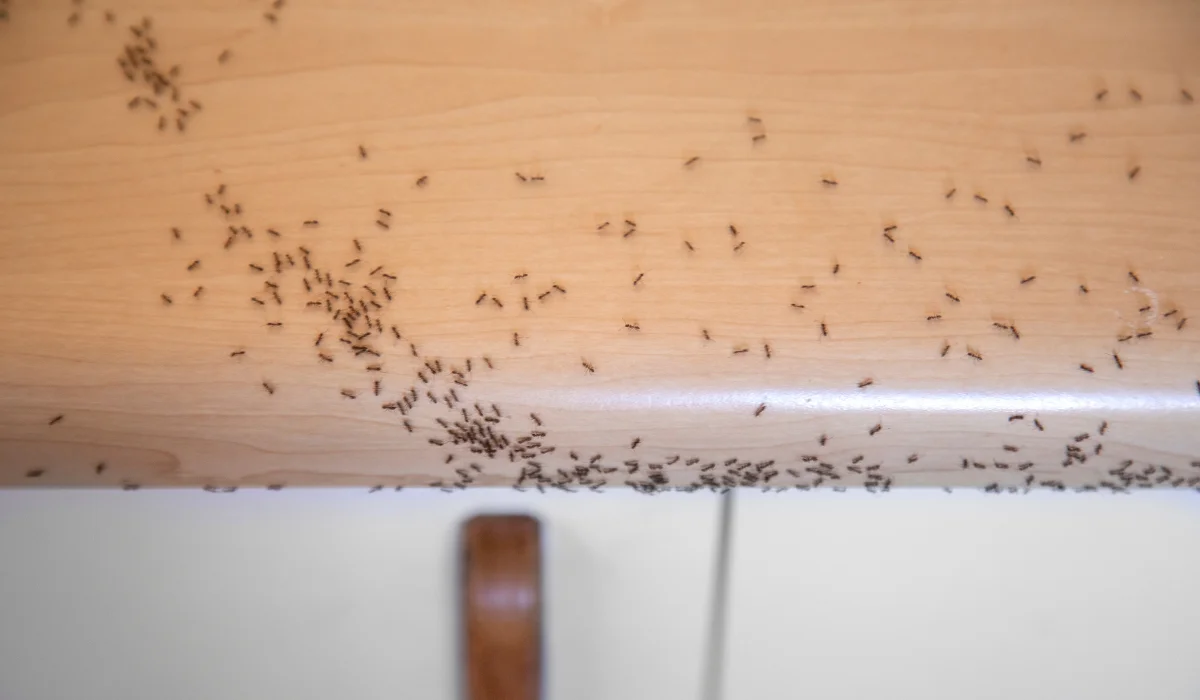
Ants often appear suddenly. One day, your kitchen is clear, the next there’s a trail of ants moving across your countertops toward a crumb you didn’t even notice. For homeowners and renters, keeping ants out is not about luck. It’s about knowing what attracts them and how they get inside.
If you want to know how to keep ants out of your house, the answer starts with prevention. The right steps can stop an ant invasion before it becomes a full infestation that spreads from the kitchen to other rooms.
This guide explains simple strategies that help stop ants.
If the problem keeps returning, professional ant control services can help identify the source and prevent new colonies from forming. These tips will help you get rid of ants and keep your space pest-free long term.
Key Takeaways
- Seal entry points such as cracks, crevices, and gaps around window sills to block access.
- Remove food sources and standing water to prevent attracting worker ants.
- Prevent ants from entering by sealing cracks, wiping up crumbs and spills, and storing food in tightly sealed containers.
- For recurring issues or carpenter ant infestations, schedule professional ant control to eliminate the colony at its source.
Prevention Tips That Actually Work
The most effective way to keep ants out is to remove what attracts them and block their entry points. These proven prevention tips focus on stopping problems before they start.
Seal Cracks and Crevices With Caulk
One of the fastest ways to prevent an ant problem is to seal small gaps where ants enter. Ants only need a tiny gap to get inside, especially odorous house ants and other small ant species.
Walk around your home and inspect windowsills, baseboards, and foundation lines. Use caulk to close cracks and crevices where ants may enter.
This step alone can stop a trail of ants from forming indoors and is an important part of pest-proofing your home to help block future ant nests from expanding into your walls.
Wipe Away Ant Trails Immediately
Ant trails are not random. Worker ants leave scent trails that guide the rest of the ant colony to food sources.
As soon as you see a trail of ants, clean up the area thoroughly. Use soapy water or lemon juice to break down scent trails so other ants cannot follow them. If you only kill ants without removing the trail, the colony will keep sending reinforcements.
Use Ant Bait the Right Way
Ant bait is often more effective than a spray-on ant killer. While sprays can kill ants you see, they rarely eliminate the ant colony.
Place ant bait along active ant trails and near entry points. Worker ants carry the bait back to the nest, which helps eliminate ants at the source. Avoid using repellent products at the same time, as they can prevent ants from taking the bait.
Avoid Natural Remedies
Some homeowners turn to natural remedies like food-grade diatomaceous earth, essential oils, or DIY bait mixtures as a first step, but pest control professionals generally view these as limited solutions rather than reliable fixes.
While certain products may help reduce ant activity, they rarely eliminate the source of the infestation.
How Ants Get In (And How to Block Them)
To keep ants out, you need to know how they get in. Identifying and sealing common entry points is one of the most effective ways to prevent ongoing ant problems.
Gaps Around Doors and Windows
Doors and windows are common entry points for an ant invasion. Worn weatherstripping or small gaps along the frames give ants easy access.
Inspect and replace damaged seals. Apply caulk where needed and make sure screens fit tightly. Closing these gaps reduces the chance that ants will build nests inside.
Utility Lines and Exterior Penetrations
Where cables, pipes, and utility lines enter your home, small openings often go unnoticed. Carpenter ants and other types of ants can use these areas as hidden highways.
Seal these gaps with appropriate materials and monitor for ant trails. If you continue to see activity near these spots, professional pest control may be necessary to locate the ant colony outside.
Foundation Cracks
Cracks along the foundation are prime access areas, especially after heavy rain. Ant species, such as odorous house ants, look for moisture and may enter to escape flooding.
Regular inspections and sealing foundation cracks help with long-term pest management. These steps are especially important for commercial pest control clients who need consistent prevention around large structures.
How to Remove the Stuff Ants Want
To stop ants from coming inside, it’s important to eliminate what attracts them. Food sources, moisture, and accessible shelter all contribute to attracting ants indoors.
Eliminate Accessible Food Sources
Accessible food is the main reason ants move indoors. Store food in sealed containers and wipe down countertops daily.
Even small spills attract worker ants. Pet food left out overnight is another major attractant. Feed pets at set times and clean up any leftover crumbs or kibble to avoid attracting ants.
Manage Standing Water and Moisture
Standing water under sinks, near appliances, or around foundations attracts ants and other pests, such as wasps.
Fix leaks promptly and dry damp areas. In bathrooms and kitchens, wipe up excess moisture. Many ant species seek water as much as they do food, so reducing moisture levels removes a key motivator for entry.
Keep Trash and Recycling Sealed
Garbage cans that are not tightly closed act as powerful attractants. Clean bins regularly and use liners to reduce residue buildup.
For commercial properties, schedule frequent trash removal and monitor dumpsters for activity. Consistent sanitation is a core part of pest management and helps prevent repeated ant invasions.
Keep Ants Out for Good: Outside Steps
To keep ants out long term, it’s important to address activity outside your home. Targeting nests and reducing outdoor access points can significantly reduce indoor infestations.
Trim Vegetation Away From the Home
Tree branches and shrubs that touch the house act like bridges for ants. Carpenter ants in particular may use these pathways to reach siding and rooflines.
Keep vegetation trimmed at least several inches away from the structure. Keeping plants away from the house reduces direct access and lowers the chance of hidden ant nests forming near the building.
Use Boiling Water on Outdoor Ant Nests
If you locate visible ant nests in soil or cracks in pavement, pour boiling water directly into some outdoor ant nests to reduce activity, but use this method cautiously and only on accessible nests. This method works best for small, exposed nests and fire ants in open areas.
Boiling water is not a complete solution for every ant species, but it can shrink localized colonies and reduce surface-level activity around patios and sidewalks.
When DIY Isn’t Enough: Schedule an Ant Inspection
Sometimes, despite your best DIY efforts, the ant problem keeps coming back. When ants return repeatedly, the colony is often larger than it appears, located inside walls or under foundations.
Carpenter ants can damage wood structures, and certain ant species are harder to eliminate with over-the-counter products. If you continue to see ant trails after using ant bait and sealing entry points, it may be time to call a professional pest control company.
A pest control technician can identify the types of ants involved, locate hidden nests, and recommend targeted ant control based on the situation.
Residential pest control plans focus on long-term prevention, while commercial pest control programs often include regular monitoring to help keep businesses protected from recurring pest activity.
If you’re ready to get rid of ants for good, our team at Pfitzer Pest Control can help. Our team creates ant control plans based on the pest problem at your property.
Contact us today to schedule service or discuss next steps to solve your ant problem.
FAQs
How do I permanently get rid of ants in my house?
To permanently eliminate ants, eliminate food sources, seal entry points, and use ant bait to target the colony. Cleaning scent trails and applying deterrents, such as diatomaceous earth, also helps. For recurring issues, professional pest control may be necessary.
What is the best natural way to repel ants?
A natural way to repel ants is to use peppermint oil, lemon juice, and food-grade diatomaceous earth at entry points. These natural remedies act as deterrents, but they may not fully eliminate a large ant infestation.
Why do ants keep coming back after I kill them?
If ants keep returning, the main ant colony is still active. Killing visible worker ants does not eliminate the queen. Using ant bait to reach the ant colony or scheduling an inspection for targeted pest management is often the most effective solution.
Prev Post